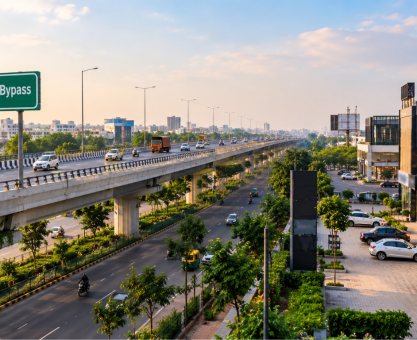
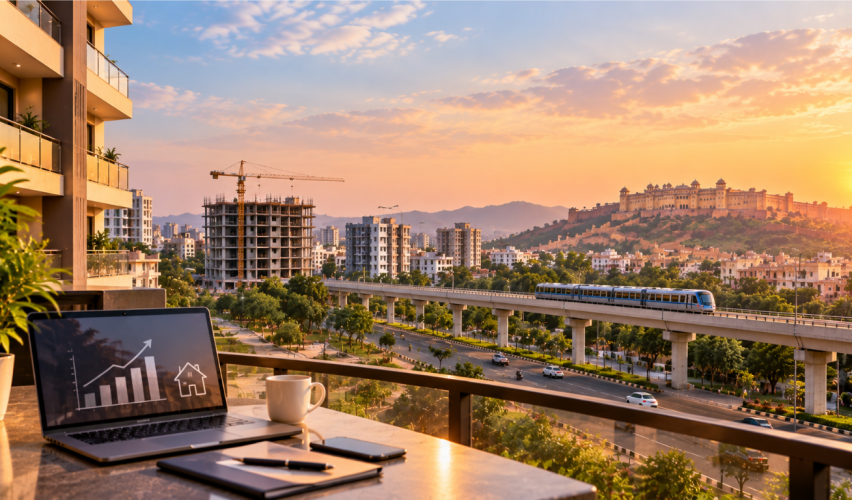
Why do homes near new metro lines and expressways so often get pricier? Mostly because access is part of what a buyer pays for. Cut the commute and an area suddenly suits more people. Jaipur, with a running metro line, a planned ring road and a long list of city upgrades, shows this well. It’s also why people searching for new projects in Jaipur keep one eye on every route announcement.
How infrastructure moves prices
- Travel time drops; a home five kilometers from a station with a good approach road can feel closer than one two kilometers away through jammed lanes.
- More people can consider the area Shorter trips make it realistic for tenants, families, and businesses who had written it off.
- Confidence grows Once work is visible, developers launch projects and buyers start taking the area seriously.
Prices usually follow once enough people notice.
What Jaipur is building
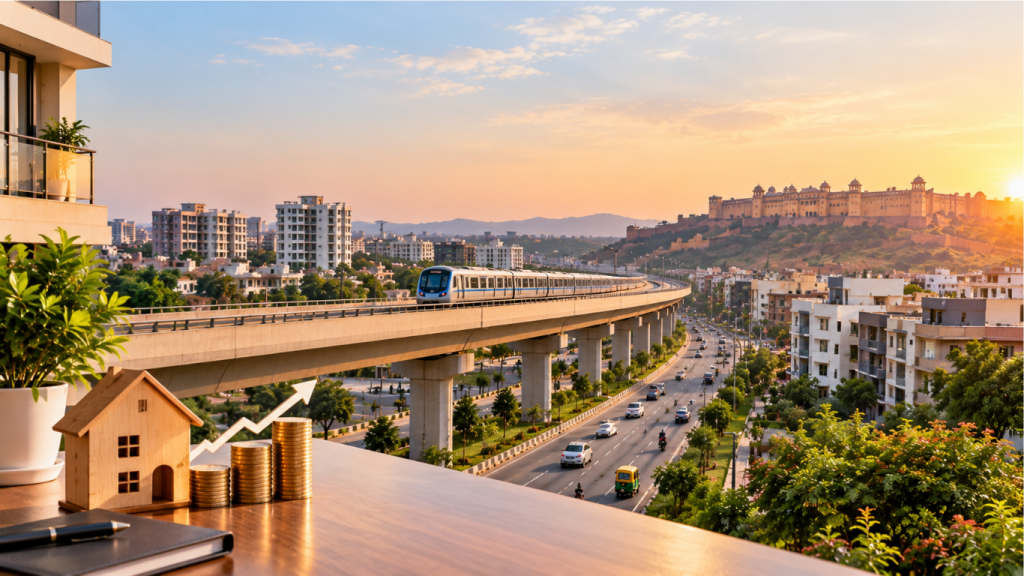
Several projects shape the picture. Market commentary often points to the Delhi-Mumbai Expressway, RRTS and the metro extension as growth drivers. The Metro’s Pink Line runs between Mansarovar and Chandpole, and Phase 2 was reportedly cleared by the Union Cabinet in April 2026. The Ring Road is planned as a six-lane, access-controlled expressway around the city. Closer to daily life, a reported ₹2,233 crore plan under RUIDP Phase 5 targets roads, sewerage, drainage, and traffic. This post doesn’t quote price figures, since they vary by locality and change quickly. Check recent registry deals and confirm each project’s status with the relevant authority.
Not every project helps the same buyer
- Metro lines: They tend to lift values sooner for people already commuting. Near a metro line, ask how easily you can walk to the station.
- Ring roads: They tend to reward those with a longer horizon. Along the Ring Road, look closely at interchanges, service roads, and approvals.
- Everyday improvements: Better roads, drainage, and traffic flow make life better on a day-to-day basis, but the price impact is slower and less predictable.
A simple example
Picture a family with a fixed budget working near the city center. One option is a cheaper home farther out, close to the planned ring road, where full demand may be years away. The other is a pricier home in an established area near the metro.
Neither is automatically right. The first suits patience and a long hold. The second suits a family that wants to move in soon and rent easily later. This is an illustration, not market data. When you compare residential property in Jaipur, settle your timeline first, then pick the corridor that fits.
Conclusion
Jaipur shows that infrastructure doesn’t set prices on its own. It changes access, and prices follow the demand that it creates. See what has actually been built, match the corridor to your timeline, and verify before you commit.
Ready to explore your options?
Not sure which corridor suits you? Bigsauda can help you filter listings and choose homes that fit your budget and plans. Browse current properties or talk to our team before you decide.
Frequently Asked Questions
Yes. Delays, cancelled plans, long construction, and added congestion can all weigh on an area.
There’s no fixed timeline. It depends on completion, access, and how fast people move in.
Not always. Walkability, safety, and the neighborhood matter as much as the station.