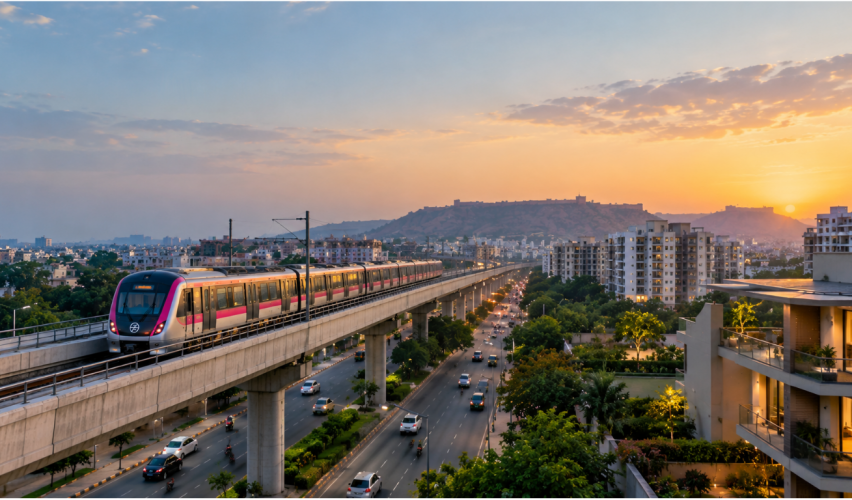
Jaipur has always been a city that grows quietly. Then something big happens, and the market shifts faster than most buyers expect. The ₹13,037 crore metro expansion is that kind of moment.
This is not a flyover or a road widening. This is the kind of infrastructure investment that changes which parts of the city people actually want to live in, work from, and put money into. If you are watching any upcoming project in Jaipur right now or comparing projects in Jaipur across different localities, the metro context belongs in that conversation.
What the Metro Expansion Actually Covers
Phase 2 takes the metro into areas that Phase 1 never reached. The new corridors cover parts of the city that have been growing residentially for years but without the transit backbone to match. Here is what is changing on the ground:
- Extended alignment corridors—new routes reaching the eastern, northern, and southern growth zones where housing demand has outpaced transport options for years
- New station locations—fresh access points in localities that previously had no metro presence and relied entirely on road-based commuting
- Better last-mile options—feeder services and integration infrastructure connecting stations to surrounding residential areas
- Shorter commute times—the distance between developing localities and central Jaipur employment zones shrinks meaningfully once alignments go live
- New commercial footfall zones—station areas naturally generate daily pedestrian traffic that retail, food, and service businesses can build around.
When commute times fall, people reconsider localities they previously wrote off. That reconsideration shows up in property demand before the stations even open.
What Jaipur Metro’s First Phase Actually Showed Us
The first phase of Jaipur Metro left behind something useful for investors—a clear before-and-after picture of what metro access does to surrounding property markets.
Properties near operational first-phase stations moved ahead of the broader Jaipur market as construction timelines became credible. The appreciation was not dramatic overnight, but it was consistent, and it arrived earlier than most buyers who waited for completion expected.
The second-phase corridors are already showing early versions of the same pattern. Developer interest in station-adjacent localities has picked up. Land prices are moving. The buyer profile in these areas is shifting toward people who intend to actually build and use the property rather than hold it purely for speculative resale. For anyone tracking a commercial project in Jaipur near confirmed second-phase alignments, that shift in buyer profile matters because it signals genuine underlying demand rather than sentiment-driven activity.
Platforms like Bigsauda list verified commercial and residential projects across Jaipur’s key localities, including areas along new metro corridors, helping buyers and investors identify genuinely approved options before committing capital to any specific opportunity.
Phase 2 corridors are already showing early versions of the same pattern. Developer interest in station-adjacent localities has picked up. Land prices are moving. The buyer profile in these areas is shifting toward people who intend to actually build and use the property rather than hold it purely for speculative resale. For anyone tracking a commercial project in Jaipur near confirmed Phase 2 alignments, that shift in buyer profile matters because it signals genuine underlying demand rather than sentiment-driven activity.
Which Property Types Are Best Positioned
Commercial spaces near stations
Shops, offices, and co-working spaces within practical walking distance of metro stations benefit from something straightforward—more people passing through daily. For retail tenants, that footfall is directly connected to revenue. For office tenants, staff accessibility improves, and recruitment gets easier when the workplace is metro-connected.
Residential along new corridors
Mid-segment housing in previously overlooked localities is seeing renewed interest as Phase 2 timelines firm up. Families who dismissed certain areas because of commute time are coming back for a second look.
Mixed-use developments
Station-area projects that layer retail, residential, and office in a single development tend to capture the broadest benefit from metro investment. Multiple demand drivers working simultaneously give these projects stronger long-term occupancy and value stability.
The Right Time to Act
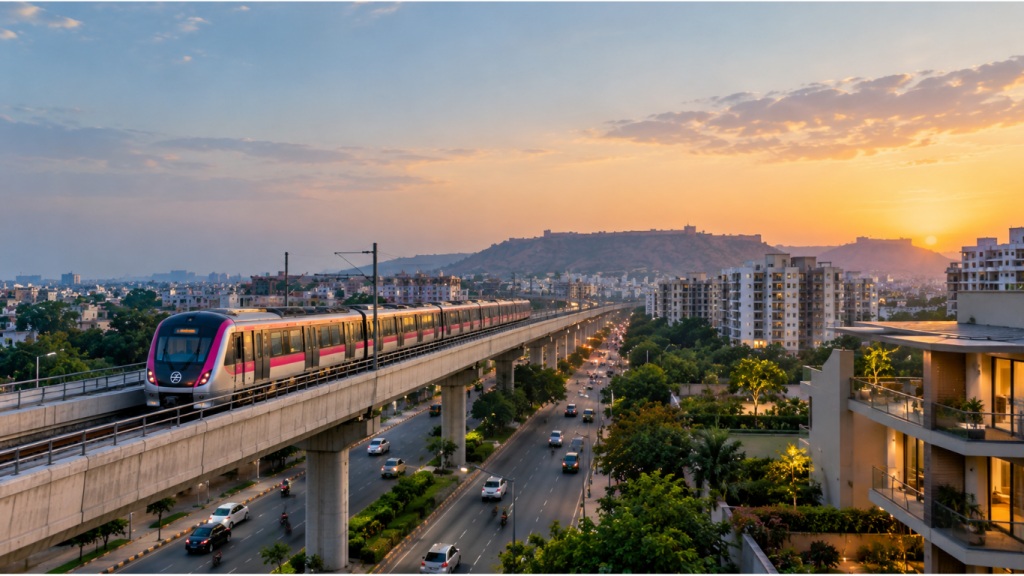
Metro infrastructure follows a predictable pricing cycle. The gap between the confirmed alignment announcement and the station opening is historically when entry pricing is most favorable. Once stations open and the commute benefit becomes part of daily life, that advantage gets priced in quickly.
Buyers and investors evaluating projects in Jaipur near Phase 2 stations should run the standard checklist—approvals, developer history, lease structure, total cost—but add station proximity and catchment quality as specific evaluation criteria rather than treating them as background context.
How can Jaipur Metro Phase 2 affect rental demand?
Improved metro connectivity can make nearby residential properties more attractive to students, working professionals, and families looking for convenient daily commutes. Areas with easy station access, essential amenities, and well-developed infrastructure may experience stronger rental demand as the project progresses, although actual results will depend on local market conditions.
The Bottom Line
₹13,037 crore does not get spent on infrastructure without changing the city around it. For anyone evaluating new projects in Jaipur or comparing residential and mixed-use projects in Jaipur along new metro corridors, this expansion is not background news. It is a direct input into which localities make financial sense right now and which ones will look obviously underpriced in three years.
The metro is already reshaping Jaipur. The question is whether you are positioned ahead of that shift or catching up after it.
Frequently Asked Questions
Areas along the eastern and southern alignments, including corridors toward Jagatpura, Ambabari, and Sitapura, are positioned to see the most meaningful property market response as construction advances and opening timelines become concrete.
No. Metro access can improve demand fundamentals for the surrounding property, but the actual appreciation depends on the market conditions at the time, the quality of the developer, how complete the approvals are, and how well the specific station catchment develops commercially. It’s a definite plus, but not a guaranteed one.
Market history suggests that waiting for completion typically means paying prices that already reflect the connectivity benefit. Buyers who entered during construction phases in comparable Indian metro markets generally captured more of the appreciation cycle than those who waited for operational confirmation.
Improved metro connectivity can make nearby residential properties more attractive to students, working professionals, and families looking for convenient daily commutes. Areas with easy station access, essential amenities, and well-developed infrastructure may experience stronger rental demand as the project progresses, although actual results will depend on local market conditions.