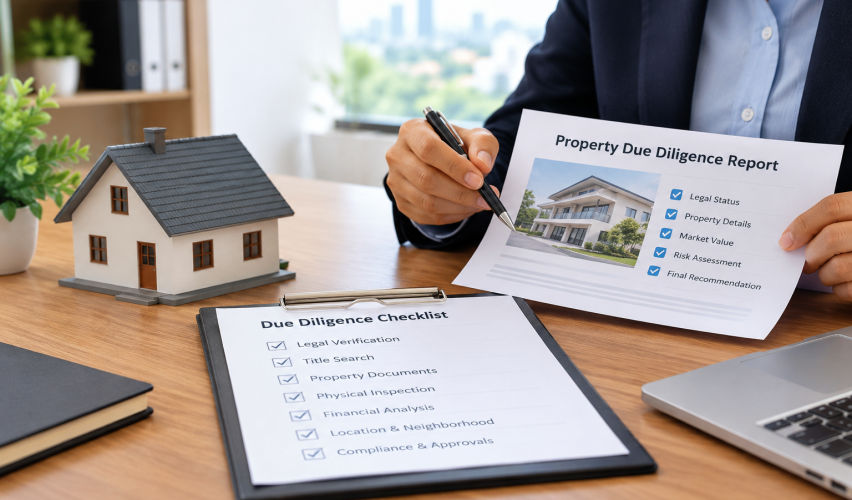
Due diligence means checking a property’s papers, condition and pending dues before you agree to buy or rent it. A proper due diligence checklist helps you catch problems early, so you can walk away without losing money.
Say you visit a flat, love the balcony, and pay a token amount the same week. Then you ask for the documents, and they show a loan that was never cleared. Now you’re stuck, and getting your money back is a long process. Checking the facts first avoids this.
What is due diligence?
Due diligence is the homework you do before buying or renting a property. It comes down to three questions. Can this person legally sell or rent it to me? Are the papers clean? Is the building really in the shape it looks?
Most people do it in two rounds. First comes the light round: compare a few listings, visit the area, and drop whatever doesn’t fit. Once one property has your attention, the serious round begins. You ask for documents, get the place inspected, and have a lawyer go through the title.
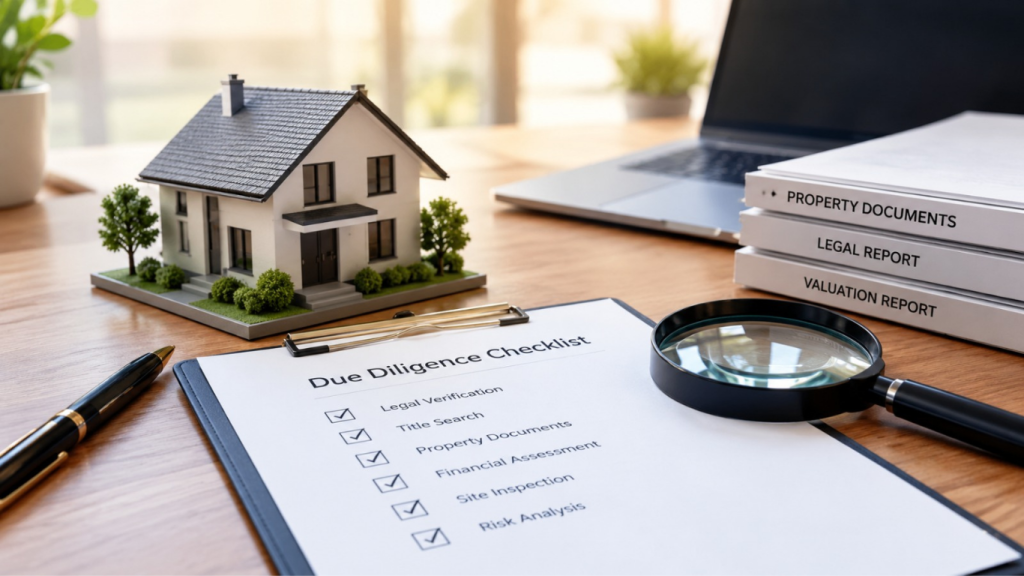
What are the different criteria to cover in due diligence?
Here’s what your due diligence checklist should include:
- Title and ownership: Read the sale deed and the older deeds. The chain of owners shouldn’t have any gaps.
- Encumbrances: Ask whether a loan, mortgage, attachment or court case is attached to the property.
- Approvals: Get the sanctioned plan and the completion or occupancy certificate. For a new project, check the RERA registration too.
- Land use: Make sure the property is approved for what you plan to do with it, whether that’s a home or an office.
- Dues and taxes: Collect property tax receipts and utility bills, and ask if society maintenance is pending.
- Physical condition: Look for seepage, cracks, leaking pipes and faulty wiring. Top floors and terraces need extra attention.
- Area details: Compare the carpet, built-up and super built-up area with what the documents say.
- Society rules: Find out what’s allowed for parking, guests, pets and renovation.
For a rental, the focus shifts. You mainly care about the owner’s authority, the lease period, notice terms, deposit and the list of items in the house.
Why is due diligence required while purchasing or leasing a property?
For most families, a home is the biggest purchase they’ll ever make. With a clear title and proper approvals, you’re much less likely to face a dispute later. It also makes a home loan easier to get, and it helps if you ever want to sell.
Tenants have a simpler worry: is the person handing over the keys really the owner, or someone authorized by the owner? It also pays to agree on who handles repairs and maintenance before you move in, since that’s where many rental arguments start.
And whatever you find gives you bargaining power. A problem can get you repairs, a lower price or better terms. Sometimes it just tells you to say no.
How can one get a due diligence report?
- Gather the documents from the owner: deeds, tax receipts, approved plan, society papers and ID proof.
- Verify them with official records at the sub-registrar office, the local development authority or municipal body, and the state RERA portal.
- Appoint a property lawyer to do a title search and give a written opinion.
- Book a site inspection with a civil engineer or a qualified inspector.
- Put everything into one report and read it before paying any booking amount.
Fees and timelines vary by property, so ask for a quote first.
Frequently Asked Questions
It means verifying a property’s title, approvals, dues and condition before you buy or lease it.
Yes. Confirm who the owner is, check that they can rent it out, and read the whole agreement.
Title, encumbrances, approvals and RERA, land use, tax and maintenance dues, building condition, area details and society rules.
You can collect the papers yourself, but a property lawyer should check the title.
It depends on your agreement. Before signing or paying, you can negotiate or leave. After that, have a lawyer read the cancellation and refund terms.
Sale deed, earlier deeds, approved plan, completion certificate, tax receipts, society no-dues letter and the seller’s ID proof.
Yes. Check the RERA registration, the builder’s approvals, the land title and the promised delivery date.
No. It reduces risk by catching issues early, but you still need a written agreement and legal advice.
It depends on the property and how quickly the papers arrive. Your lawyer can give an estimate.