
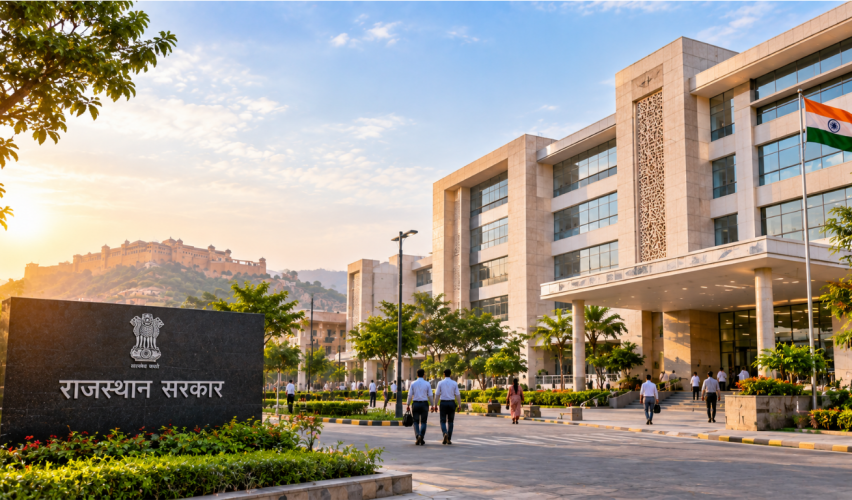
The way governments allocate space is getting altered in Jaipur. The Urban Development and Housing (UDH) Department is working on amendments to the Land Allotment Policy 2025. In lieu of allotting separate land parcels to every department, it intends to have multi-story complexes with offices within the premises of the Jaipur Municipal Corporation. This change is indicative of the availability of land in the city, and property buyers should take note of this.
Why the Government Is Making This Change
There are two reasons cited by the officials. The amount of government land is decreasing, and the value of land continues to rise in the state capital. All 8 departments construct their own office on separate plots today. The proposal is to have multiple offices occupy the same building.
The plan will save urban land, prevent repeated construction, enhance utilization of public resources, and establish administrative centers, one official said. The plan is still in draft form, and the officials hope that it will go into effect by the end of this year.
What the New Complexes Will Include
Each complex will have designated office areas and shared facilities such as
- Parking
- Meeting rooms
- Cafeterias
- Security systems
- Lifts
- Washrooms
After consulting with the appropriate administrative department, allocation of space will be decided by the finance department. It will base each decision on actual requirements.
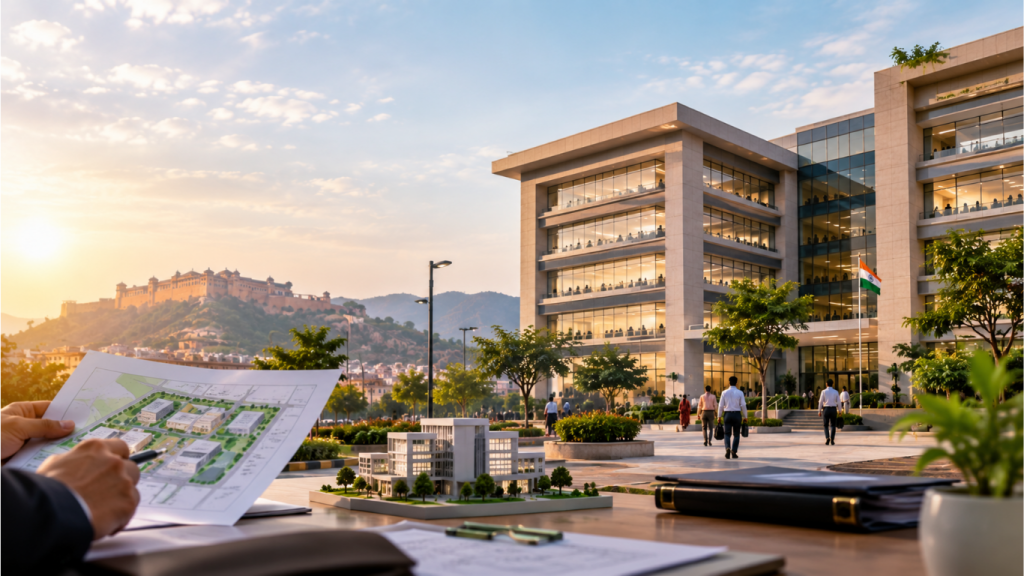
How Ownership and Upkeep Will Work
Departments will not own or have perpetual rights to departmental space. When a department ceases to use it, it comes back to the Jaipur Development Authority (JDA) and can be reallocated to another government department. The purpose of the rule is to prevent the underutilization or vacancy of public office.
Each complex will be maintained by a department/agency designated by the finance department. The draft also proposes to attach to the largest department the duties of maintenance. Costs will be shared based on the share of space assigned to each occupant.
What This Means for Property Buyers and Investors
The policy reflects the strength of the decision-making influence of land scarcity in Jaipur now. When the government sees urban land as too expensive for single-use buildings, so can private buyers.
- Shared buildings are the solution to the high land costs, and they’re starting to become a practical solution.
- Commercial offices that have well-managed shared facilities might be more attractive to tenants.
- The surrounding area could become busier around the future administrative centers, but potential purchasers should check out the details after the policy is in place.
- Clear cost-sharing rules increase the manageability, rentability, and ease of sale of a building.
Lessons Business Owners Can Apply
If you’re thinking of leasing or purchasing commercial property, the cost-sharing model provides you with a helpful checklist. Before you sign, ask the following questions:
- What is the way the building shares costs for maintenance?
- Who is responsible for parking, lifts, and security?
- Will the space be utilized to the same extent as your team sizes, or will part of it remain unused?
Questions Worth Asking
Do you prefer to pay a higher price for an office in a building with well-functioning shared space? Is your company really such a size that it requires its own facility, or does it fit into a shared facility well?
Conclusion
This plan is still a draft and, therefore, may be subject to change. But the message is loud and clear. The city of Jaipur is heading towards well-managed, compact, and shared buildings as land is no longer available for single-use plots. Purchasers who factor that into their decision-making will do better. Before investing, check the terms of shared facilities, maintenance rules, and location.
Changes such as these are important to keep an eye on because they will have an impact on commercial and residential property selection all over Jaipur at BigSauda. If you need to buy something new, please consult us first.